
Alzheimer’s disease is the most common cause of dementia, but it is not a normal part of aging. It is a progressive brain disorder that slowly affects memory, thinking, behavior, and the ability to do everyday tasks. For families, it can feel overwhelming at first—but understanding the disease and focusing on quality of life can make a huge difference.
What Causes Alzheimer’s Disease?
Alzheimer’s disease develops because of abnormal changes in the brain. The two main changes researchers talk about are:
- Amyloid plaques (protein clumps that build up between brain cells)
- Tau tangles (abnormal twisted proteins inside brain cells)
These changes damage neurons and make it harder for brain cells to communicate. Over time, this leads to memory loss, confusion, and a decline in daily functioning. Researchers also believe that age, genetics, inflammation, and vascular health (like high blood pressure, diabetes, and high cholesterol) can all play a role in how Alzheimer’s develops and progresses. Recent reviews continue to describe Alzheimer’s as a complex disease with multiple contributing causes rather than one single trigger (Wang et al, 2025).
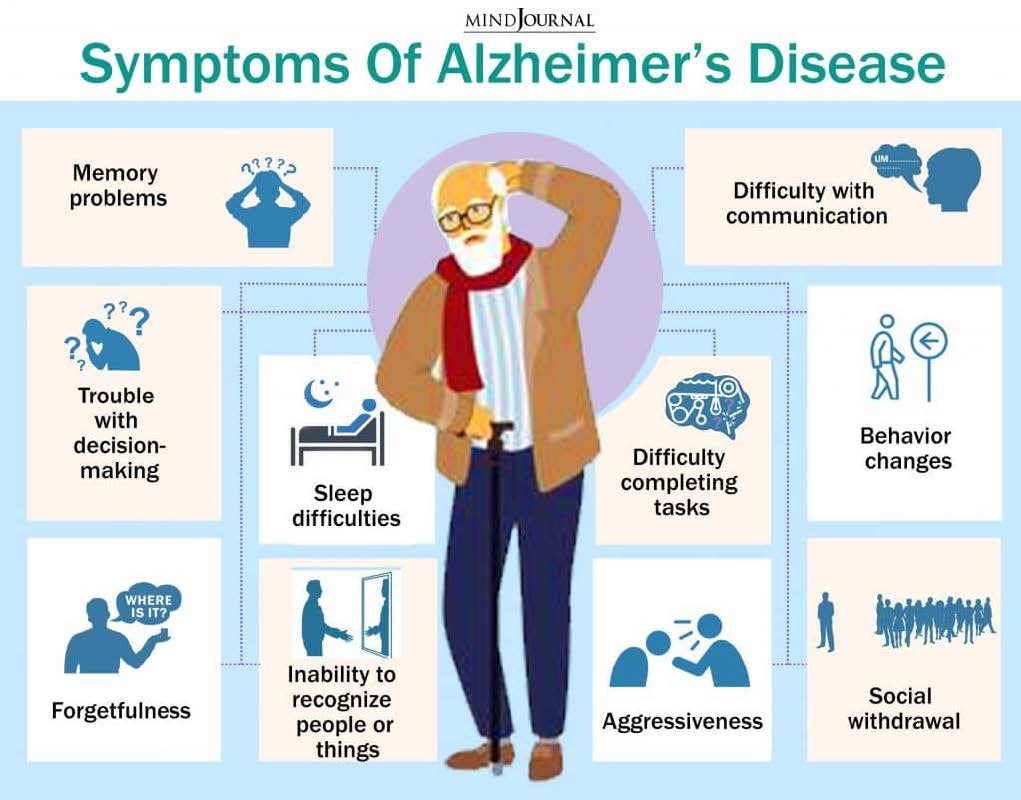
Common Symptoms of Alzheimer’s Disease
Alzheimer’s usually starts gradually. Early symptoms may seem mild at first, but they become more noticeable over time.
Common early symptoms include:
- Forgetting recent conversations or appointments
- Repeating the same questions
- Misplacing items often
- Trouble finding the right words
- Difficulty managing medications or bills
- Getting confused about dates, places, or routines
As the disease progresses, symptoms may include:
- Increased confusion and disorientation
- Wandering or getting lost
- Mood or personality changes
- Sleep disturbances
- Difficulty bathing, dressing, or eating
- Trouble recognizing loved ones in later stages
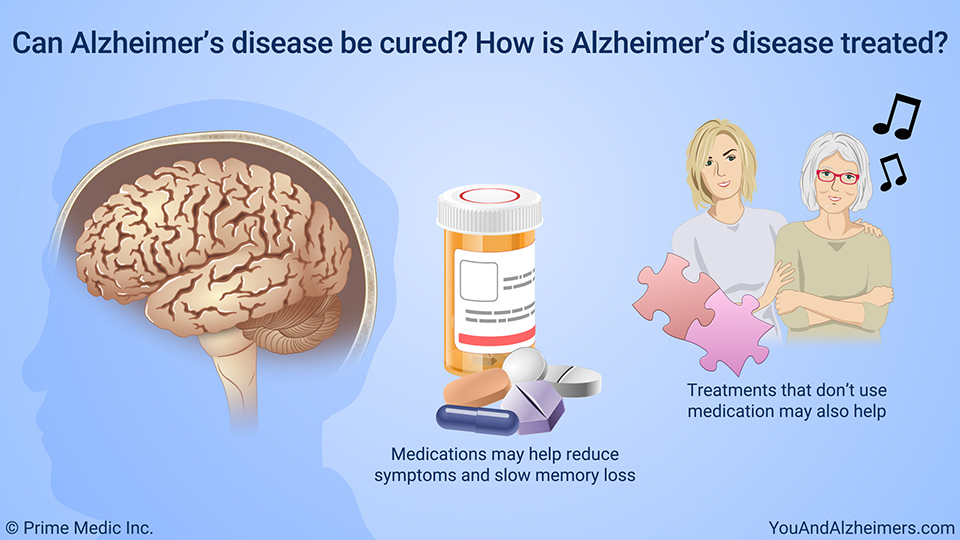
Treatment Options: Medications and Non-Drug Approaches
There is currently no cure for Alzheimer’s disease, but treatment can help slow symptoms or improve daily functioning.
Pharmacological (Medication) Treatments
Common medications include:
- Donepezil (Aricept)
- Rivastigmine (Exelon)
- Galantamine (Razadyne)
- Memantine (Namenda)
These medications may help with memory, attention, or behavior for some individuals.
Newer medications, such as anti-amyloid, are designed to target amyloid in early Alzheimer’s disease. These drugs may slow the decline in select patients, but they do not reverse the disease and require careful monitoring because of possible side effects such as brain swelling or bleeding (Wang et al, 2025).
Non-Pharmacological Treatments
These are often just as important—and sometimes even more helpful for daily quality of life.
Examples include:
- Exercise programs
- Cognitive stimulation
- Music therapy
- Structured daily routines
- Social engagement
- Environmental safety changes
- Caregiver education and support
Recent evidence shows that non-drug interventions can improve cognition and daily function, especially in mild-to-moderate Alzheimer’s disease, with exercise-based interventions showing some of the strongest benefits (Chen et al, 2025).
Here is a website you could explore for physical activity and exercise ideas: https://www.alzheimers.org.uk/get-support/living-with-dementia/exercise-types-ideas

The Most Important Part: How to Promote Health, Well-Being, and Quality of Life
This is the part families need most—because even though Alzheimer’s changes memory, quality of life can still be protected.
1. Keep Life Predictable
People with Alzheimer’s usually do better with a consistent routine.
Try to keep:
- Wake-up time the same
- Meals at regular times
- Medications on schedule
- Bathing and bedtime routines consistent
Why it helps: Familiar routines reduce anxiety, confusion, and agitation.
Simple idea: Use a large whiteboard or calendar with the day’s plan.
2. Make the Home Safer Without Taking Away Dignity
Safety matters, but the home should still feel like a home—not a hospital room.
Helpful safety changes:
- Remove loose rugs and clutter
- Improve lighting in hallways and bathrooms
- Install grab bars
- Use non-slip mats
- Lock up medications and cleaning products
- Consider door alarms if wandering is a concern
- Use a medical alert bracelet or ID card
Big tip: Simplify the environment instead of over-controlling it.
3. Keep the Person Moving
Physical activity is one of the best non-drug strategies for maintaining function and mood.
Great options:
- Short daily walks
- Chair exercises
- Stretching
- Light dancing
- Supervised balance exercises
Exercise may help with:
- Mood
- Sleep
- Restlessness
- Strength and mobility
- Overall function
Recent research found that nonpharmacologic interventions—especially exercise therapy—can improve cognitive outcomes in older adults with mild-to-moderate Alzheimer’s disease (Chen et al, 2025)

4. Focus on Meaningful Activities, Not “Perfect” Memory
Even if memory is changing, people with Alzheimer’s can still enjoy connection and purpose.
Ideas that often work well:
- Looking through old photos
- Listening to favorite music
- Folding towels or sorting simple items
- Gardening
- Coloring or easy crafts
- Prayer, devotional time, or church music
- Talking about happy life memories
The goal is not to “test” memory. The goal is comfort, familiarity, and connection.
5. Protect Nutrition, Hydration, and Sleep
People with Alzheimer’s may forget to eat, drink, or rest.
Helpful strategies:
- Offer small, simple meals
- Use finger foods if utensils become frustrating
- Encourage fluids throughout the day
- Keep caffeine low later in the day
- Reduce evening overstimulation
- Use nightlights to reduce nighttime confusion
These small changes can prevent dehydration, weakness, worsening confusion, and falls.
6. Support the Caregiver, Too
Caring for someone with Alzheimer’s can be physically and emotionally exhausting. Families often try to do everything alone—and that usually is not sustainable.
Caregiver support ideas:
- Join a support group
- Use respite care
- Rotate caregiving tasks among family members
- Keep a medication and appointment binder
- Ask the provider about home health or social work referrals
Reminder: Asking for help is not giving up. It is part of good caregiving.
Take a look! This website has more information on how to avoid burnout as a caregiver and other resources: https://www.myalzteam.com/resources/managing-caregiver-burnout-and-alzheimers
Local Resources for Families in St. Cloud / Osceola County / Central Florida
Alzheimer's Association - Central & North Florida Chapter
Address: 2170 W State Rd 434 #300, Longwood, FL 32779
Phone: (407) 951-7992
Website: Alzheimer’s Association Central & North Florida
Services: 24/7 helpline, caregiver support groups, education classes, community programs, care navigation, and dementia resources for families across Central and North Florida. The chapter serves 43 counties in the region.
Alzheimer's & Dementia Resource Center
Address: 1470 Gene St, Winter Park, FL 32789
Phone: (407) 436-7750
Website: http://www.adrccares.org
Services: Caregiver support groups, counseling, education, dementia care planning, workshops, and community referrals for families coping with Alzheimer’s and related dementias.
Osceola Council on Aging
Address: 700 Generation Point, Kissimmee, FL 34744
Phone: (407) 846-8532
Website: Osceola Council on Aging
Services: Transportation, meals, adult day health services, home care, senior support services, and programs that can help families caring for an older adult with dementia at home.
Senior Resource Alliance
Address: 3319 Maguire Blvd, Suite 100, Orlando, FL 32803
Phone: (407) 514-1800
Elder Helpline: 1-800-963-5337
Website: Senior Resource Alliance
Services: Caregiver support, long-term care referrals, aging and disability resource services, SHINE Medicare counseling, and community programs for older adults in Osceola, Orange, Seminole, and Brevard counties.
Final Thoughts
Alzheimer’s disease affects memory and thinking, but it does not take away the need for dignity, comfort, and connection. Medications can help some people, especially early on, but daily routines, safety, exercise, meaningful activities, and caregiver support often have the biggest impact on quality of life. Families do not have to do this alone—and with the right support, people living with Alzheimer’s can still have moments of joy, purpose, and peace.
References:
Chen, K., Zhao, X., & Zhou, J. (2025). Effect of a single nonpharmacological intervention on cognitive functioning in older adults with mild-to-moderate Alzheimer’s disease: A meta-analysis of randomized controlled trials. The Journal of Prevention of Alzheimer’s Disease, 12(3), 100050. https://doi.org/10.1016/j.tjpad.2024.100050
Touhy, T. A., & Jett, K. (2022). Toward Healthy Aging: Human Needs and Nursing Responses (11th ed.). Elsevier
Wang, S., Xu, H., Liu, G., & Chen, L. (2025). Non-pharmacological treatment of Alzheimer’s disease: an update. Frontiers in Aging Neuroscience, 17. https://doi.org/10.3389/fnagi.2025.1527242


No comments:
Post a Comment